


As RFID adoption expands across healthcare, interoperability and global standards give hospitals the flexibility to evolve systems without rebuilding workflows.
According to the American Society of Health-System Pharmacists (ASHP), more than 20% of hospitals are using radio frequency identification (RFID) systems to help keep track of medications, and that number is expected to grow.1 Despite clear benefits such as improved patient safety, increased efficiency and reduced operational costs, many healthcare organizations hesitate when it comes time to replace or expand an existing RFID system.
“Hospitals usually start exploring new RFID vendors because they want better features, lower costs or stronger interoperability,” said Kurt Wolf, Vice President of Technology Services at Health Care Logistics. “But underneath those business drivers are very real concerns. Many organizations worry that switching systems will mean re-tagging inventory, rebuilding integrations, retraining staff or temporarily losing visibility into medications. That fear is understandable, especially in environments where any disruption can affect patient care.”
An integration nightmare
Hospitals pursue new RFID solutions because they want to evolve, not because their current systems have failed. As RFID adoption matures, organizations are increasingly focused on expanding how they use the technology, from the pharmacy to nursing units, patient care areas and supply chain workflows.
“What’s making switching RFID systems feel especially daunting is that hospitals aren’t standing still,” Wolf said. “Organizations are actively looking to expand RFID read points beyond the pharmacy to gain better product visibility, improve patient safety and support more automated workflows across the health system.”
He added, “But as they think about adding those touchpoints, many realize that if their data isn’t standardized, each new reader and integration deepens their dependence on a single vendor. That creates real anxiety, not because hospitals don’t want to evolve, but because they worry about being locked into systems that become harder and more expensive to change over time.”
That concern becomes even more pronounced when organizations try to centralize RFID data. “From an operational perspective, this is where risk really starts to compound,” Wolf said. “If RFID data isn’t standardized, every vendor change or system expansion requires custom integrations just to make sure data flows into a central repository. That adds cost upfront, but more importantly, it introduces ongoing risk. Gaps in visibility, delayed data or inconsistencies can affect inventory accuracy, recall management and medication availability.”
Wolf pointed out, “For hospitals, the concern isn’t just technical complexity. It’s whether they can trust the system to consistently support safe, uninterrupted patient care as they grow.”
One standard for all systems
Global standards offer a clear way forward.
“When RFID data is encoded using a global standard like GS1, hospitals regain control,” Wolf said. “They are no longer designing workflows around a specific vendor’s data model. Any compliant reader can identify the product and understand the data the moment the tag is scanned. That gives organizations confidence to modernize, expand or change systems without re-tagging inventory or rebuilding integrations.
“Instead of feeling locked in, hospitals maintain flexibility and choice, knowing their RFID strategy is built on a foundation that supports long-term growth, competition and operational resilience,” he explained.
By standardizing how RFID data is encoded and read, hospitals reduce both the perceived and actual risks associated with system changes. The result is an ecosystem where innovation becomes far less disruptive.
Supporting the use of pre-tagged products
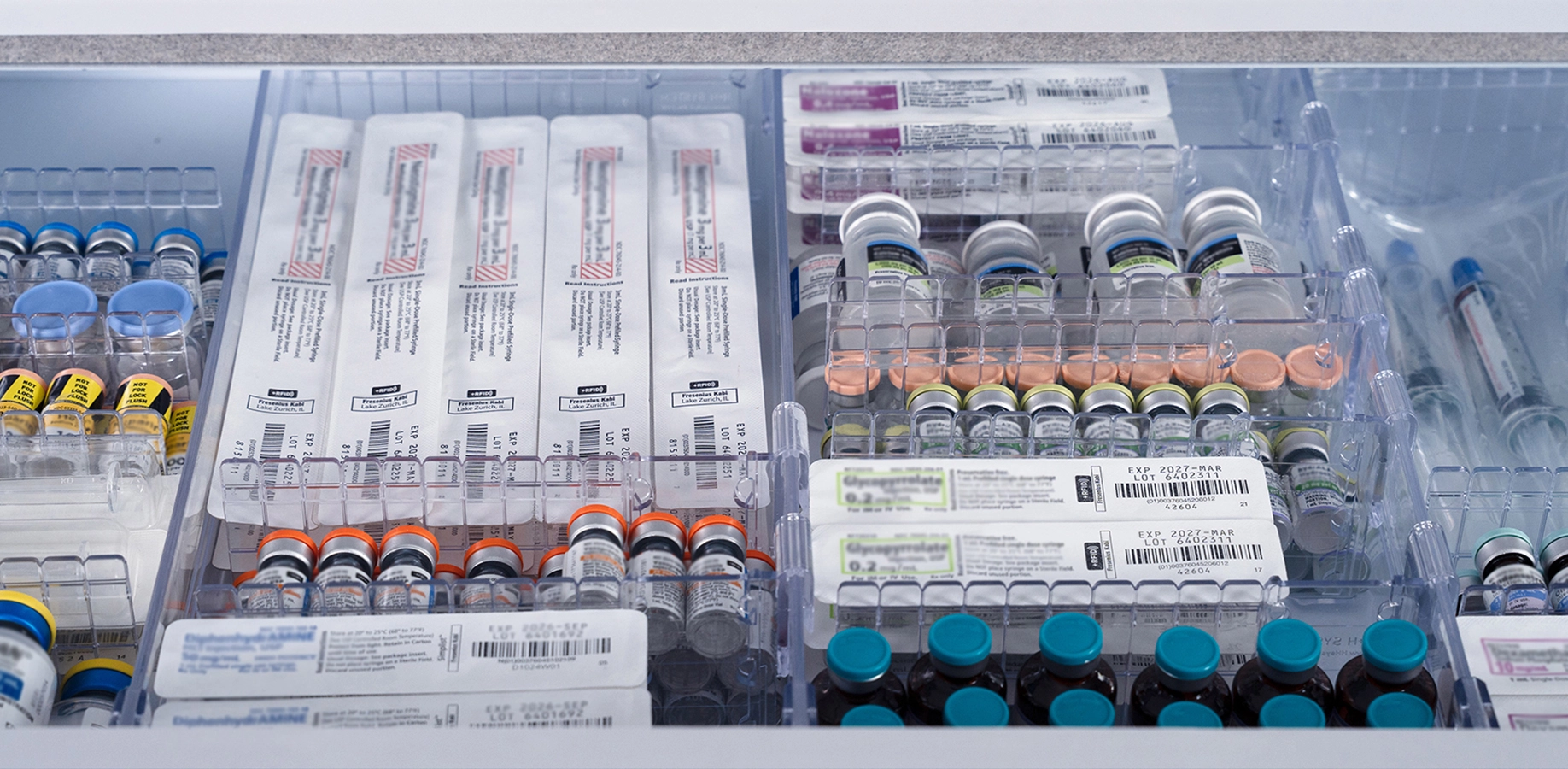
Standards-based RFID adoption also enables hospitals to take full advantage of pre-tagged products from pharmaceutical manufacturers.
“Standards-based RFID gives hospitals the freedom to fully leverage pre-tagged products without worrying about system compatibility,” he said. “Operationally, that translates into faster restocking, fewer manual steps and much clearer insight into inventory levels across kits, carts and storage areas. At the same time, that efficiency directly supports patient safety.”
Wolf concluded, “When inventory data is accurate and up to date, organizations are better positioned to prevent expired or recalled medications from reaching patients, while ensuring critical therapies are available when and where they’re needed.”
Article reposted with permission from Healthcare IT News.